
When Material Shapes the Idea
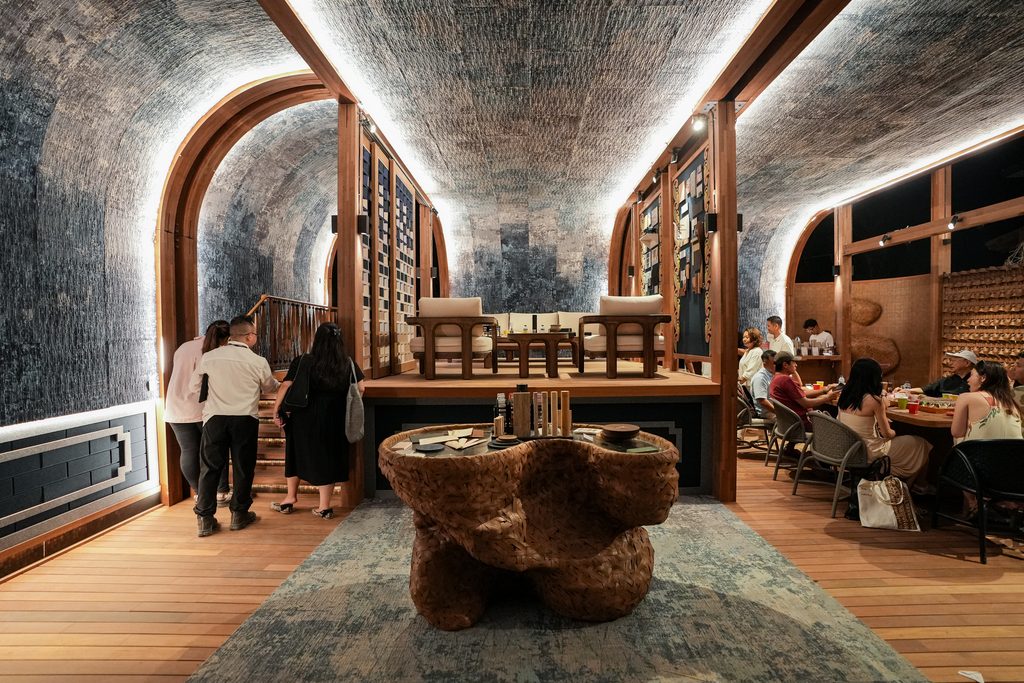
In the design process, materials often come after the idea.
The form is determined first, and then materials are selected to bring it to life.
Yet in many compelling works, this relationship works in both directions. It is not only the design that determines the material, but the material also helps shape the design.
This approach is particularly evident in Alunan Pesisir, the pavilion by VIVERE Group and Eugenio Hendro presented at JIA CURATED 2026.
Here, materials are not treated merely as finishing elements or components that shape the visual language. Each material brings its own character, capabilities, and limitations, which then become part of the creative process.
When Design Meets Material Intelligence
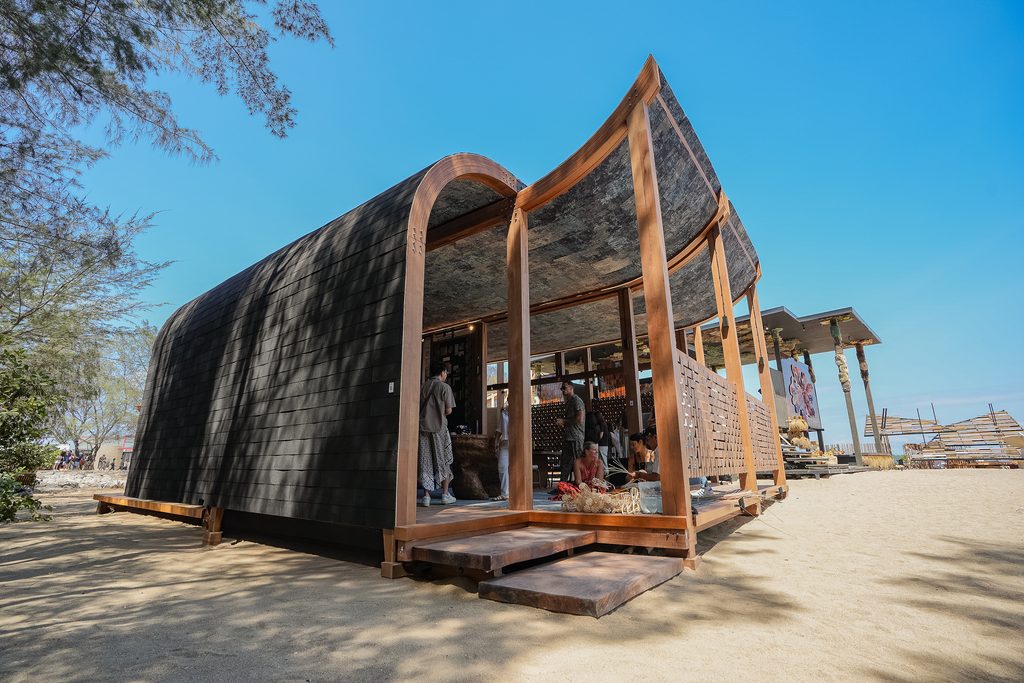
One of the key challenges of Alunan Pesisir lies in its pavilion structure.
Its design language called for timber elements that would remain slender while, at the same time, forming the character of a curved roof. This requirement led the design process toward the use of glulam, or glued laminated timber, as the main structural material.
This is where the collaboration with Timberlab and Buana Triarta became important.
A form may be easy to imagine in a sketch. But turning it into a space that can physically stand requires an understanding of material behavior, structural principles, production processes, and how each component will come together during construction.
The role of the collaborators therefore goes beyond simply receiving drawings and executing them.
Material knowledge becomes part of the process of translating an idea.
With engineered timber such as glulam, wood can be developed into structural elements with more flexible dimensions and forms compared to conventional solid timber. In Alunan Pesisir, this capability helped bridge the desired form with the structural requirements it needed to fulfill.
This highlights an important aspect of the design process: material expertise can become part of creative thinking.
Let the Material Speak
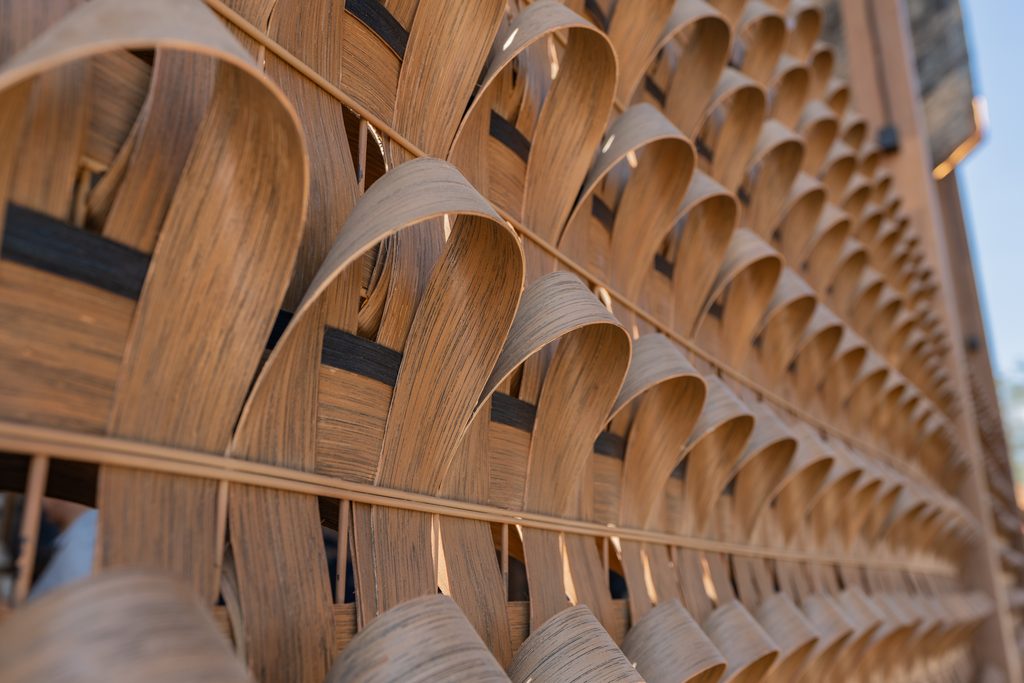
The character of the timber in Alunan Pesisir is not hidden.
Its grain, color, texture, and surface are intentionally left visible as part of the pavilion’s identity.
The decision may sound simple, but it brings a different perspective to the way we approach materials.
Materials do not always need to be transformed until they lose their character.
Sometimes, design becomes stronger when we understand what a material already possesses and give it the space to express itself as it is.
A similar principle emerges in the exploration of Karuun, a rattan veneer material used in Alunan Pesisir.
Rather than stopping at a familiar veneer application, the material was developed into elements that can move in response to the wind, woven into three-dimensional forms, and used across table and bar surfaces.
This exploration shows that innovation does not always mean discovering a new material.
Often, innovation begins with a simpler question:
What else can this material do?
Where Craftsmanship Meets Technology
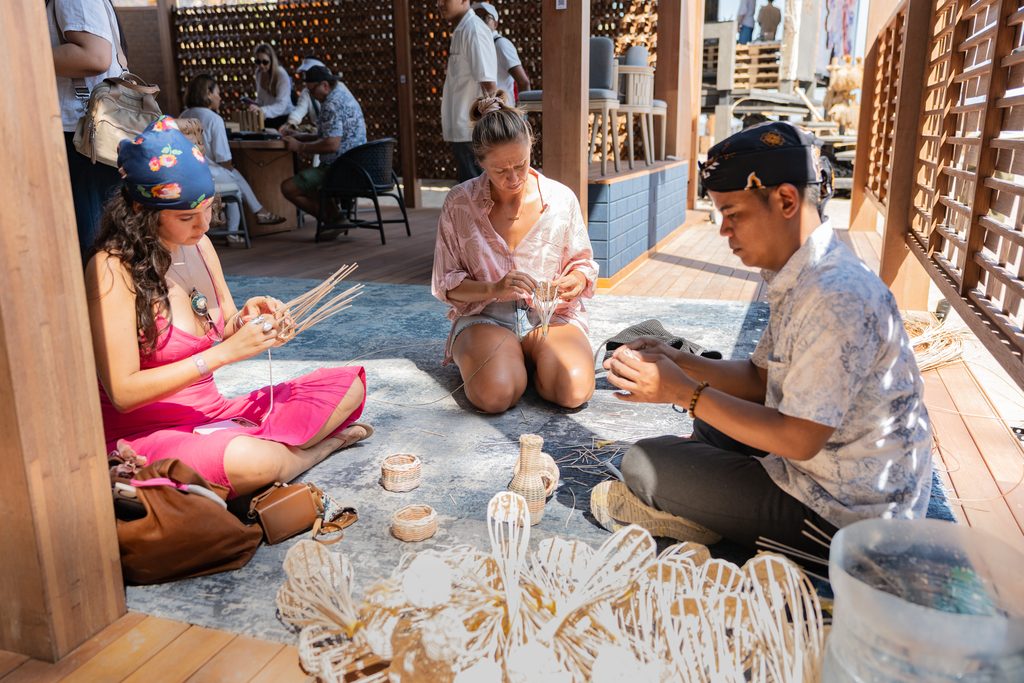
This question becomes even more relevant when materials meet craftsmanship.
Rattan, timber, and weaving techniques are not new within the Indonesian context. Yet when this knowledge meets contemporary design processes, engineered materials, and production technology, their potential applications can expand far beyond the functions we have traditionally known.
Alunan Pesisir reveals a meeting point between two worlds that are often positioned as opposites: craftsmanship and technology.
Craftsmanship brings deep knowledge shaped by experience, the touch of the hand, and tradition. Technology, on the other hand, offers precision, engineering, and the ability to process materials in new ways.
The two do not have to replace one another. Instead, it is at the point where they meet that materials discover new possibilities for form and value.