
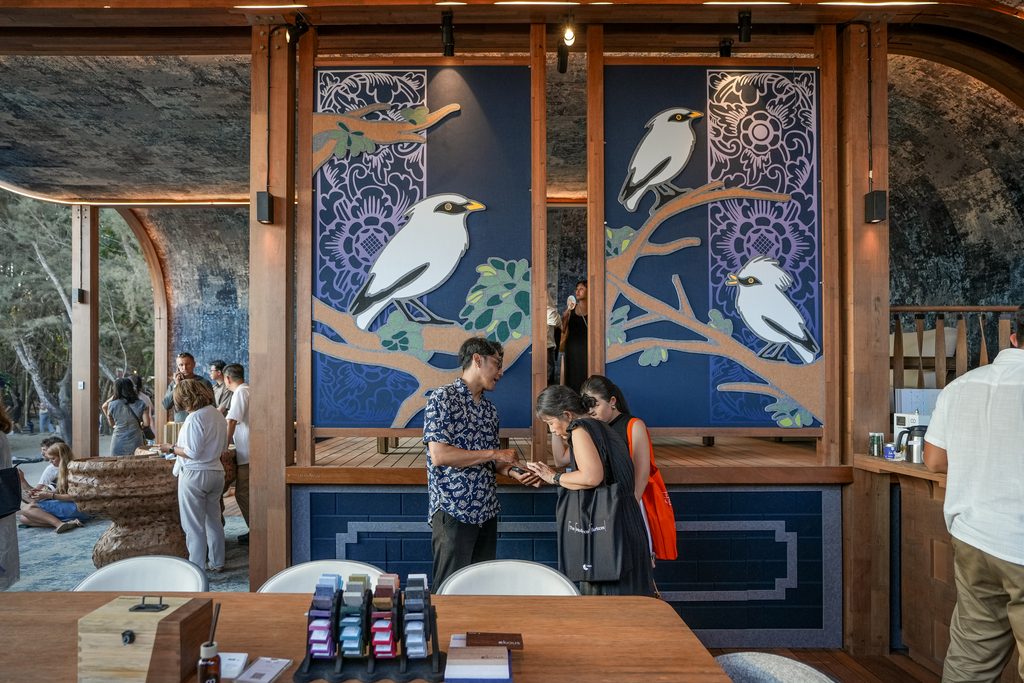
There are many ways to translate nature into design. Organic forms, natural colors, raw materials, or patterns inspired by nature are often the most visible choices.
Yet the relationship between humans and nature is far more complex than what can be represented visually. It moves, evolves, and influences one another.
This idea became one of the starting points for Alunan Pesisir – Where the Rhythm Lands, a pavilion presented by VIVERE Group together with designer Eugenio Hendro at JIA CURATED 2026, held at Pengembak Beach, Bali, from 13–17 August 2026. Under the theme Nature Weave, this year’s JIA CURATED opened a conversation about the relationship between humans and nature, and how design can become part of a broader ecosystem of life.
But Alunan Pesisir chose not to express nature literally. Instead, what is brought into the space is its rhythm.
When Nature Becomes Rhythm
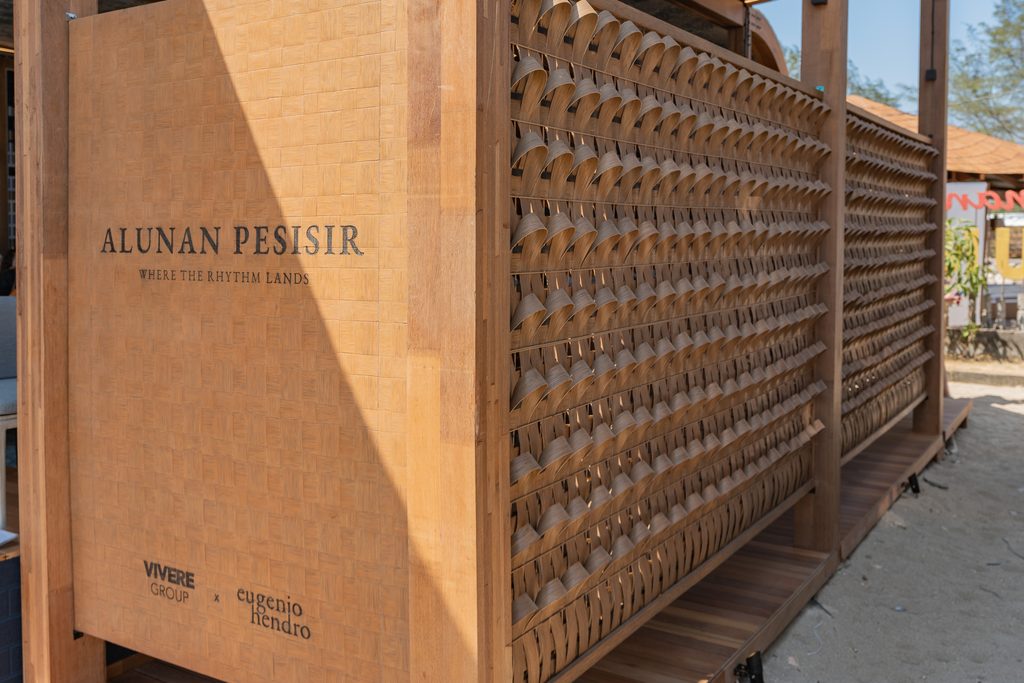
Nature is never truly still.
Waves move toward the shore and return, leaving their traces across the sand. As the wind shifts silently and light continues to change with time, humans, too, never stop moving. We continue to evolve by creating technology, building civilizations, and passing knowledge and skills from one generation to the next.
From there, Alunan Pesisir explores three interconnected rhythms: the rhythm of humans moving toward the future, the rhythm of humans in building civilization, and the rhythm of nature that continues to unfold around us.
The three then take shape through a space that seems to weave itself together.
Seen from above, the pavilion’s structure reveals elements that meet and connect with one another. This weaving is not merely a visual gesture, but a metaphor for a broader relationship: humans draw inspiration, space, and materials from nature, while what humans create ultimately carries consequences back to the environment.
This is where design begins to become more than a matter of form.
It becomes a way of understanding relationships.
Design Is Never a Solo Act
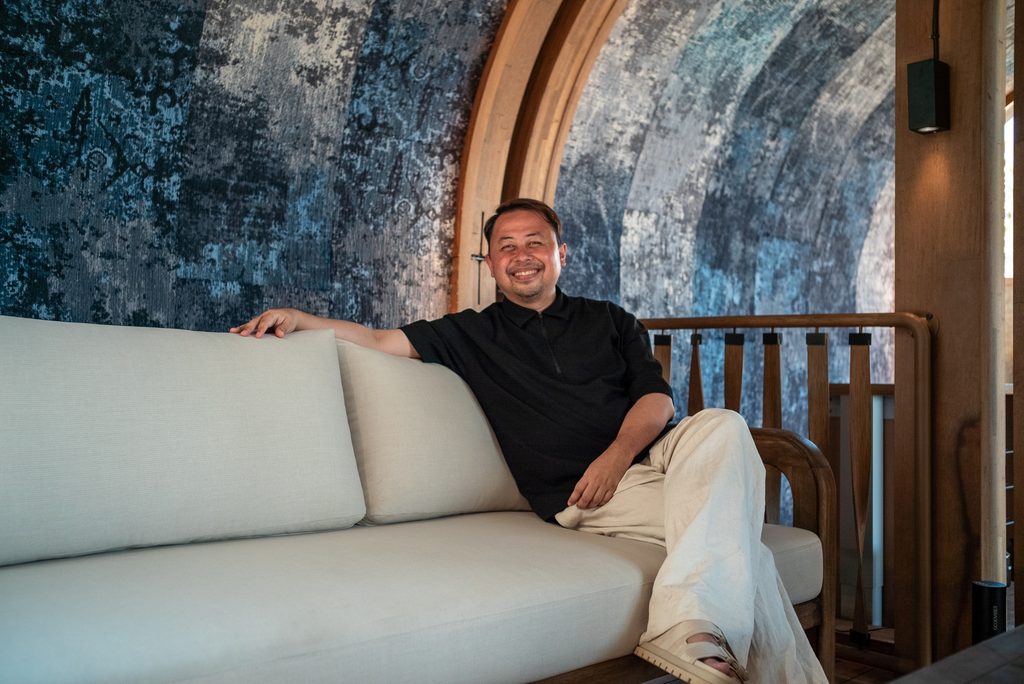
An idea may emerge from a single thought, but it is almost never brought to life by one party alone. Between concept and becoming a physical space, there is an extended dialogue between the designer, material choices, engineering, manufacturing processes, craftsmanship, and construction.
Alunan Pesisir was born from this collaborative process.
VIVERE Group and Eugenio Hendro brought the idea of Nature Weave into a spatial experience, which was then translated together with Timberlab and Buana Triarta into precise material and construction solutions.
For its main structure, the use of glulam (laminated timber) allows for the exploration of relatively slender forms while achieving pure curves. The wood is neither covered nor stripped of its inherent character; its grain, texture, color, and natural authenticity instead become the pavilion’s defining identity.
This process reminds us that the best designs rarely emerge from a single discipline taking the lead, but rather grow when different areas of expertise complement one another.
The designer understands the experience they seek to create, the material brings its own character and limitations, makers and technicians find ways to bring it to life, while craftsmanship adds a level of detail that machines cannot match.
At that point, design becomes a bridge between idea and making.
A Space to Be Experienced
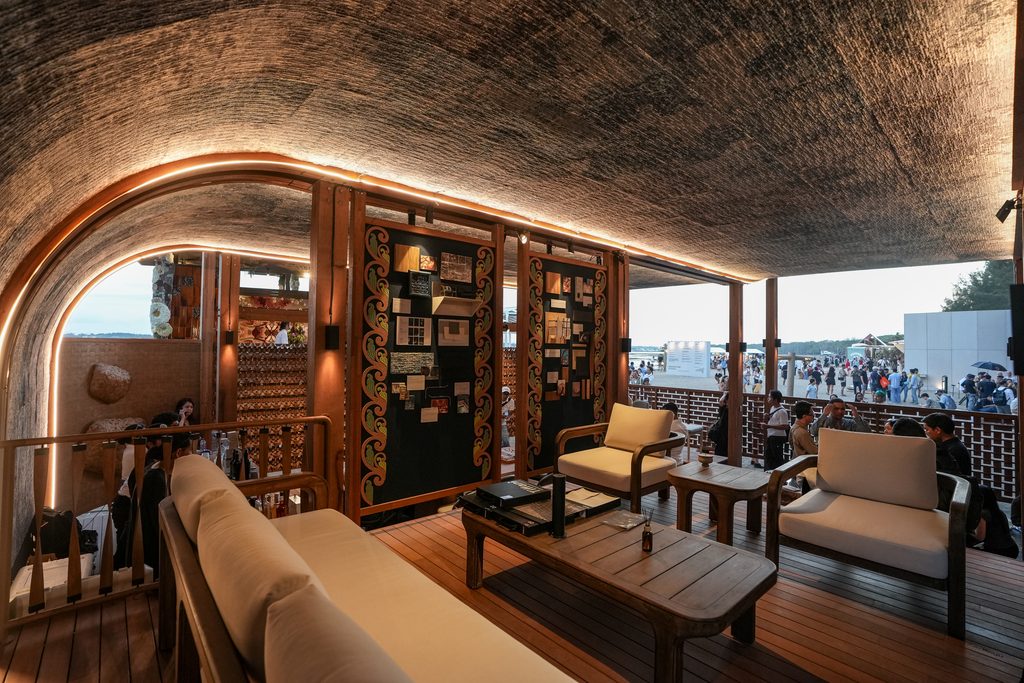
Alunan Pesisir was not designed merely to be seen.
Visitors can enter, sit, enjoy the furniture, observe the materials, and experience the changing atmosphere of the space throughout the day. Blue becomes one of its main visual characteristics, paired with the natural tones of wood, while light and shadow transform the pavilion’s experience from day to night.
This approach feels relevant because we never experience life as a static image. We experience space through movement, time, touch, light, sound, temperature, and interaction with others.
So when we talk about Designed for Life, design is not enough if it simply looks good. It needs to exist within human life.
Designing Through Relationships
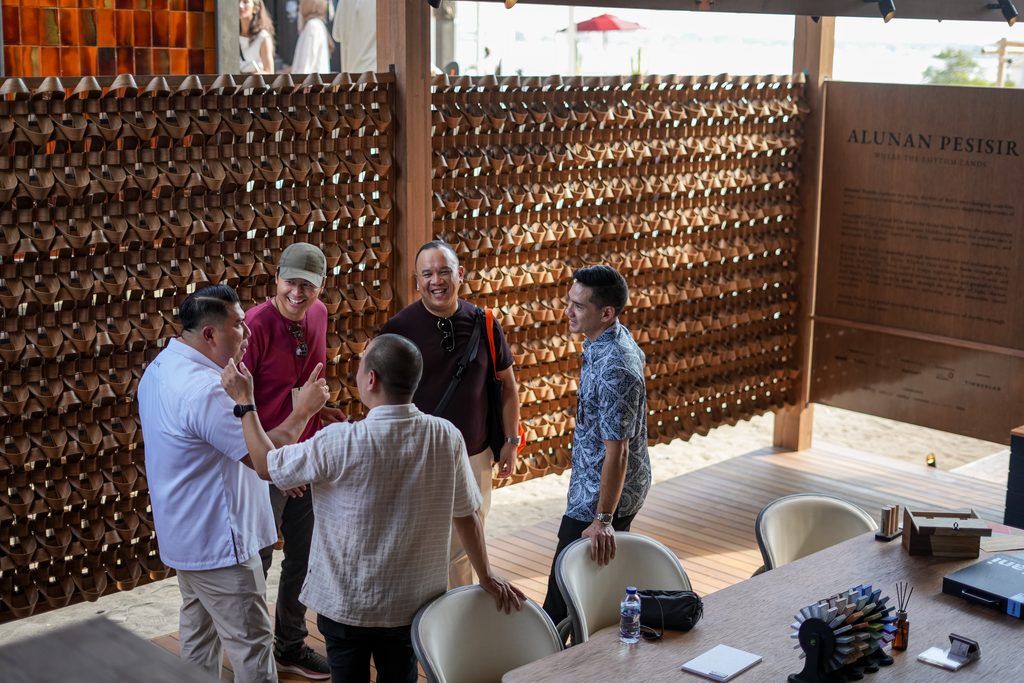
Perhaps this is also what makes Alunan Pesisir interesting to look at beyond being an exhibition pavilion.
Behind its form lies a series of relationships.
The relationship between humans and nature.
The relationship between ideas and materials.
The relationship between designer and maker.
The relationship between craftsmanship and technology.
And the relationship between what we create today and the lives that will experience it in the future.
For VIVERE Group, this way of thinking is closely aligned with the spirit of Designed for Life: that design begins with the intention to create a better life, and is then translated through every decision about form, material, space, how it is used, and how a work can continue to hold value after its initial function has ended.
In the end, Alunan Pesisir does not offer a single answer to how humans should relate to nature.
Instead, it offers a space to see that relationship from a different perspective.
That we do not simply live among the spaces and objects we create.
We live within a network of relationships.
And perhaps the most meaningful designs are those that understand that nothing truly exists on its own.